TotallyMoney: How to improve your credit score
Timeline: Ongoing from 2021
Platform: Mobile, Android and iOS
My role: Sole content designer
What I owned: Designed eligibility factor content, next best action content, and Improve tab detail pages
Aim: To give users tangible ways to improve their credit score, delivered through simple, clear, accessible content
Outcome:
"How do I improve my credit score?" is one of the most-asked questions on UK financial forums and in the r/ukpersonalfinance subreddit.
No matter that improving your score in and of itself is largely pointless, since it's a gamefied engagement feature to keep you coming back to use whatever app you're using to check it. People want to improve it because when it goes up, you get that hit of dopamine. It feels like you're making progress. I suppose if anything, it confirms the engagement tactic works.
During my 5 years and 8 months at TotallyMoney, I worked on multiple projects on how to help users improve their credit score in the app. One of these I've already written about, looking at score history.
 Phil Oakley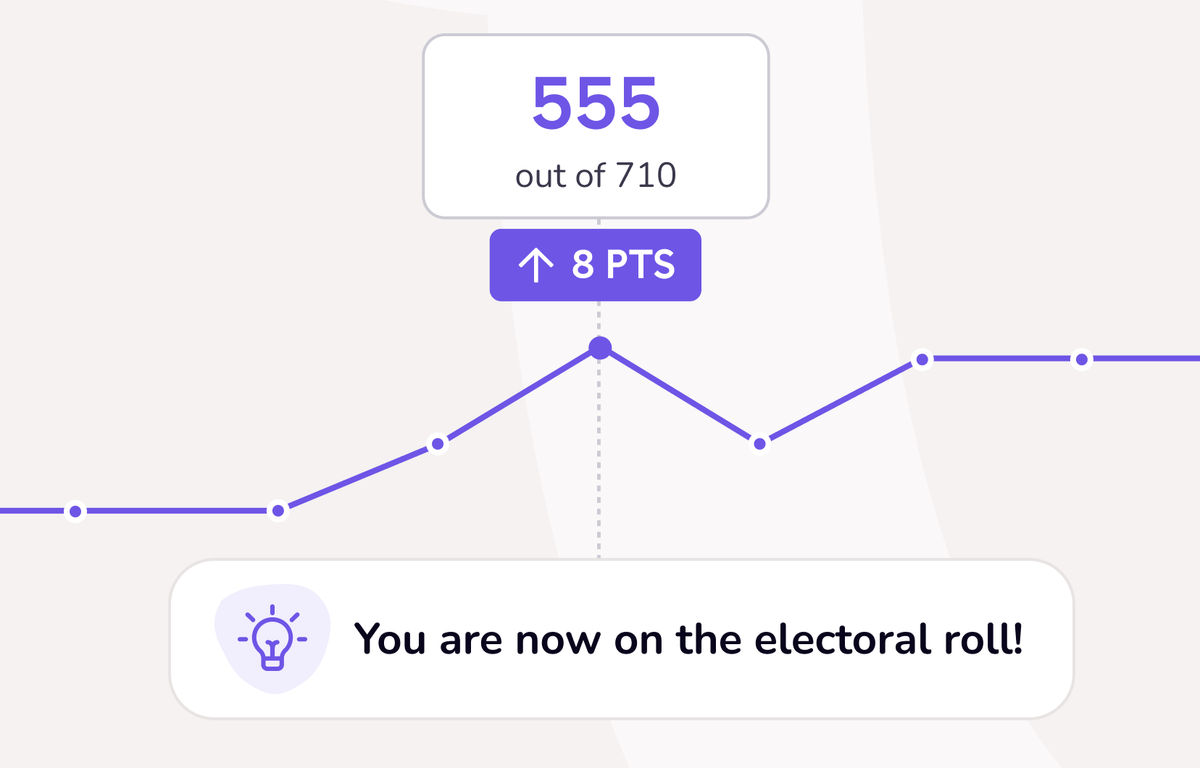
But in this post I want to focus more on the improvement itself, and the features I was involved in building from a content design and UX perspective.
Eligibility factors
The first version of what became known as the 'Improve tab' in the TotallyMoney app featured the 'eligibility factors', which showed customers what they could do to improve their credit score.
Your oldest account is 20 months old. Having an account older than 12 months is typically seen as evidence of financial stability.
You've used 47% of your available credit. Keep it below 25% if you can, as lenders prefer you not to be close to your credit limit.
It was important to me, when writing the copy for these, that they were as helpful as possible while sticking to the facts. Like other credit brokers and credit reporting services, TotallyMoney is regulated by the Financial Conduct Authority. This means that TotallyMoney is not allowed, legally, to give financial advice.
The eligibility factors - their internal name - had to be entirely factual. We couldn't say things like 'You should try to keep your credit usage below 25%' or 'Don't close your oldest account, as this shows stability to lenders', because we're encouraging or telling the user to do something.
As a result, the factors had to be positioned very carefully. The content had to present the facts and let users make up their own mind about what to do as a result.
The content of these factors were essentially a prototype for what came next.
One problem with them was the header copy. While it signposted what users could expect to find in the card body – good for at-a-glance skim reading – it wasn't readable on its own. When reading it you can't immediately know what to do; it needs the body content for the actual 'facts'.
Rewriting the factors and 'next best action'
While the first version of the factors were getting good feedback from customers, they was more we could do.
Around a year after the eligibility factors release, we started work on upgrading the feature to add in 'next best action'.
This is powered by an API provided by TotallyMoney's credit report provider, TransUnion (TU), to show users the next action they can take which will have the biggest impact on their credit score.
Alongside needing to design new content for each next best action, this also offered an opportunity for me to rewrite what we already had, fixing the problems raised above and improving the tone of each and making them impactful and actionable.
Keep this account open if you can. The older an account, the more stable you may be seen by lenders.
This is clearly more understandable than the 'oldest account' content above. It's more succinct, has the info you need to know in the header than in the body, has a suggestion, which did not qualify as advice, and a reason why it improves your score.
It's also in a more supportive and empathetic tone. Some users may not be able to keep their oldest account open, for entirely understandable reasons. While we can't address each user's individual situation, we can try and be encouraging and understanding.
Check your usage. Keep it below 25% if can, as this looks good to lenders.
This one for credit usage fixes many of the same issues. The header tells you exactly what you need to know, and the body says what you need to do. I also changed the 'lenders' bit on recommendation from TotallyMoney's compliance team, who preferred the new wording.
Because the new credit report overview tab had now been developed – which I was also involved with – tapping on the cards would now take users through to see their credit usage, missed payments, electoral register status, or a number of other factors contributing to their credit score. This meant that the content on each card just needed to give a high level overview, rather than more detail.
Next best action
On the other hand, next best action was a whole different ballgame.
Much like in the score history project, TU provided us with some copy that needed rewriting and formatting to suit TotallyMoney's tone of voice and the digital space we had on screen.
Having a credit account (e.g. a credit card), where you can demonstrate that you can spend and manage repayments within an agreed credit limit, can help to improve your credit score. However, we recognise that credit accounts are not always needed, or appropriate, but it is helpful to understand how such a facility could positively contribute to your credit score.
Clearly this could be improved upon.
Like with score history, I put in place guidelines on writing these so they'd be a consistent set, although you'd only ever see one at a time. They also had to be consistent with the rewritten eligibility factors, as the two sets would be appearing on the screen at the same time.
Each next best action should contain, in some way or form, an action for the user to take. Clearly not being able to give financial advice would make this tricky, and would require working closely with TotallyMoney's own legal and compliance team, plus with TU, as they would need to approve the content and the wider implementation of the API.
Alongside this, each next best action would be supportive, encouraging, relatable, and optimistic in some way. These themes run throughout TotallyMoney's global tone of voice, which I was deeply involved in setting up, on the product side, throughout my time at the company.
Get an account with a credit limit
Responsibly using an account with a credit limit can help improve your score, as you can show you’re a reliable borrower. However, think carefully whether you need credit before applying.
To make the next best action messages consistent with the eligibility factors, I added a header to each.
Due to the inclusion of the last sentence, a requirement from both compliance teams, this didn't qualify as financial advice. The first sentence in the body copy was entirely factual and in line with TU's original content, albeit clearer and more concise.
While this next best action message from TU is understandable, it's quite wordy and could be clearer. It could also be more supportive and empathetic.
Contact lenders about missed payments
If you're struggling to make payments on time, contact your lender(s). They may be able to help set up a payment plan that works for you. A missed payment can impact your score for up to 16 months.
The problem with missed payments is there's very little an app like TotallyMoney can actually help with. It's up to the user to talk to lenders and figure something out, ultimately.
But what we can do is be understanding, supportive, and present the facts and options. For the last sentence, which isn't in TU's original version, I asked TU for the data, as I wanted to demonstrate how damaging a missed payment can be, while still presenting it in a supportive tone.
You are using more than 50% of the available balance on 3 of your accounts. Reducing the balance on these accounts to below 50% of the available credit would help to improve your credit score.
Try to use less credit
Try to reduce the balance on 3 of your accounts using over 50% of your available credit. This could help improve your eligibility.
The key thing to note here is how the message has been flipped to make it more immediately actionable. The user can see the accounts using over 50% of their limit on the credit usage screen in the app; we don't need to tell them.
Instead, the message becomes actionable and active, with the second sentence telling them the effect it might have.